
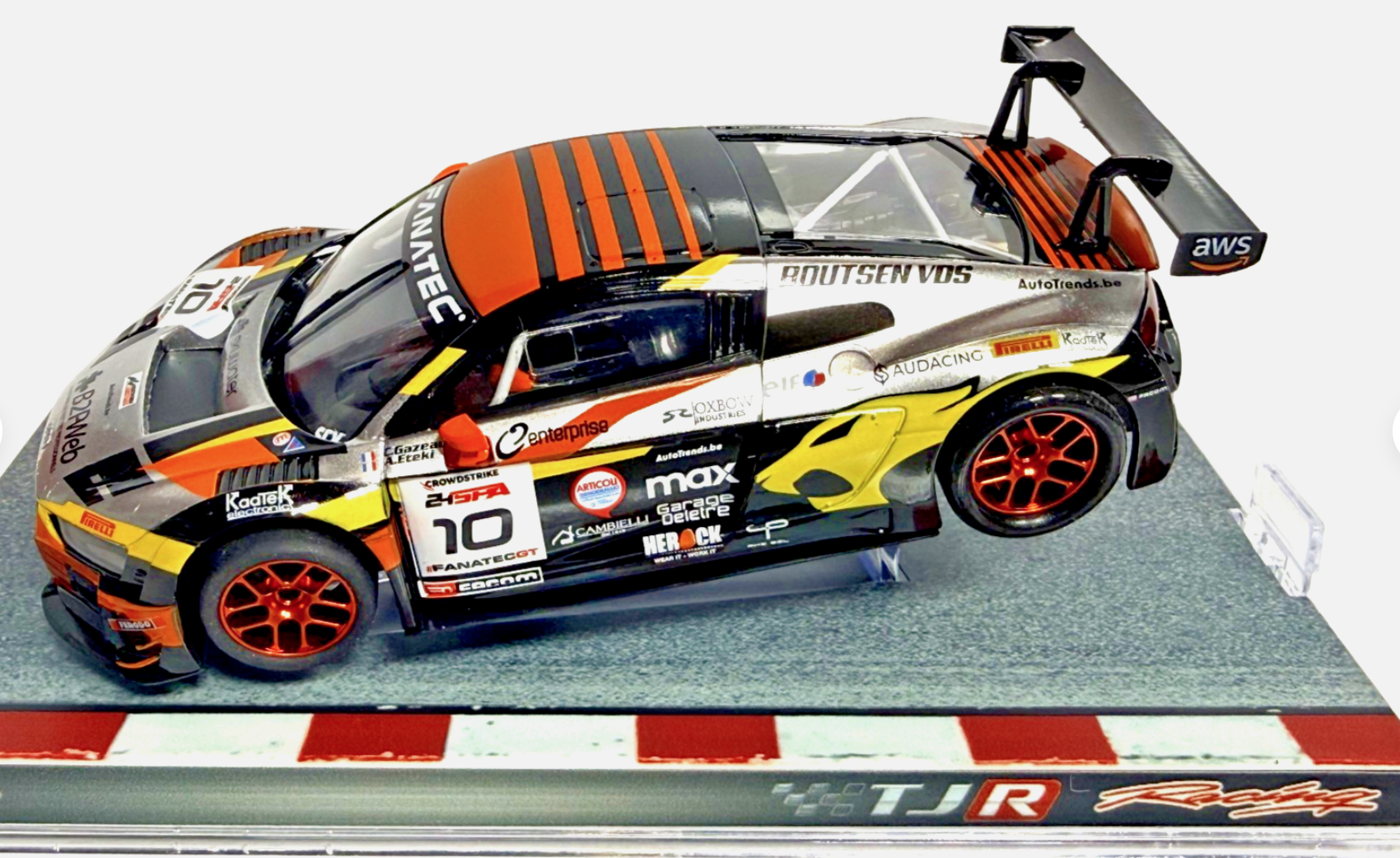
Stepping up your tabletop racing setup requires looking beyond car motors and track layouts. Traditional hand controllers tie drivers to fixed positions along the edge of the table, restricting sightlines and making it difficult to monitor technical corners. Upgrading to an SCX slot car wireless controller completely changes how you interact with your speedway. Wireless radio frequency technology frees you from restrictive cables, allowing you to walk around the entire layout, view corner entry angles clearly, and marshal your own car instantly during a deslotting incident. Beyond improved physical mobility, modern wireless throttles deliver smooth, progressive power curves that refine your acceleration out of tight turns. For serious hobbyists looking to gain a competitive edge, eliminating physical tethers is the ultimate upgrade for total track control.
Table of Contents
- How does wireless frequency stability prevent signal throttle lag?
- Why does total driver mobility transform club race monitoring?
- How do progressive throttle curves refine corner acceleration?
- What role do ergonomic grip designs play in long endurance races?
- How do smart power saving features extend controller battery life?
- Frequently Asked Questions
- Elevating your racing setup with TJR Slot Cars
How does wireless frequency stability prevent signal throttle lag?
In competitive slot car racing, a split-second delay between pulling the throttle trigger and receiving motor response can lead to a severe crash. Modern wireless controllers operate on high-frequency 2.4 GHz radio protocols, ensuring instant signal transmission directly to the main power terminal. This stable connection eliminates interference from nearby electronic devices or household Wi-Fi networks, giving drivers continuous, linear control over their vehicles. According to technical documentation on scale electronics hosted by Wikipedia, modern digital throttle protocols provide micro-second signal response times that mirror wired connections while eliminating mechanical cord wear. This instantaneous feedback allows drivers to feather the throttle through sweeping turns with absolute precision.
Why does total driver mobility transform club race monitoring?
Wired controllers force drivers to stand shoulder-to-shoulder near the power terminal, often blocking each other’s view of crucial track sections. Wireless technology allows drivers to position themselves strategically around the perimeter of the speedway. Standing near complex technical sections or blind corners gives you a clear line of sight to adjust your braking points accurately. Furthermore, if your vehicle slides out in a distant turn, you can marshal your own car instantly without waiting for a dedicated track marshal. This physical freedom creates a smoother, faster-paced racing environment for everyone involved.
How do progressive throttle curves refine corner acceleration?
Basic entry-level hand throttles use simple resistance wipers that deliver power in abrupt steps, making it difficult to control high-torque motors in tight turns. Advanced wireless controllers feature digital optical sensors that track trigger position with extreme precision. This sensor technology translates your finger movements into a smooth, progressive power curve. You can apply tiny increments of power to keep the rear tires planted during an aggressive tail drift, then pin the trigger for maximum speed down long straights. You can explore compatible track systems and power terminals by visiting our SCX 132 Track showcase.
What role do ergonomic grip designs play in long endurance races?
Endurance racing events test driver stamina just as much as vehicle durability. Holding a heavy, poorly shaped controller for hours leads to hand fatigue, cramping, and inconsistent throttle inputs. Modern wireless throttles feature lightweight, ergonomically molded grips that rest naturally in your hand. Balanced weight distribution and adjustable trigger tension allow you to race comfortably for extended sessions, maintaining razor-sharp reaction times from the green flag to the final lap.
How do smart power saving features extend controller battery life?
Nothing ruins a race night faster than a dead controller battery right in the middle of a tight battle. High-efficiency wireless controllers incorporate smart power management software that puts the unit into a low-power sleep mode after brief periods of inactivity. The moment you touch the trigger, the controller wakes up instantly without dropping connection paired to your car lane. Utilizing long-lasting rechargeable batteries or low-draw internal circuits ensures weeks of driving time between charges. Check out our latest maintenance tips and gear reviews on our onsite blog to keep your controller fleet operating smoothly.
Elevating your racing setup with TJR Slot Cars
Achieving true track mastery requires top-tier equipment that connects you directly to the action. At TJR Slot Cars, we specialize in providing enthusiasts with the latest wireless controllers, digital track upgrades, and high-performance scale vehicles. We believe that modern technology should eliminate driving frustration and maximize pure racing fun. Whether you are building a multi-lane club speedway or upgrading your personal home layout, our expert team is here to support your passion. Discover our complete lineup of premium products on our home page or get in touch through our contact page to upgrade your driving station today.
Frequently Asked Questions
Can multiple wireless controllers operate at the same time without cross-talk?
Yes, each wireless controller pairs to a unique digital frequency channel on the receiver, allowing multiple drivers to race simultaneously without signal interference.
What is the operational range of a 2.4 GHz slot car controller?
Modern 2.4 GHz wireless controllers offer a reliable signal range of up to thirty feet, which is more than enough for large home layouts or club tracks.
Do wireless controllers require special receiver modules on the track?
Yes, wireless controllers connect to a compatible digital receiver plugged directly into your main power terminal or digital control unit.
How do I know when the batteries in my controller are running low?
Most wireless controllers feature built-in LED status indicators that flash or change color when battery voltage drops below operational levels.
Are wireless controllers compatible with classic analog track setups?
Yes, specialized wireless conversion kits allow you to use digital wireless hand throttles on classic analog track circuits easily.


